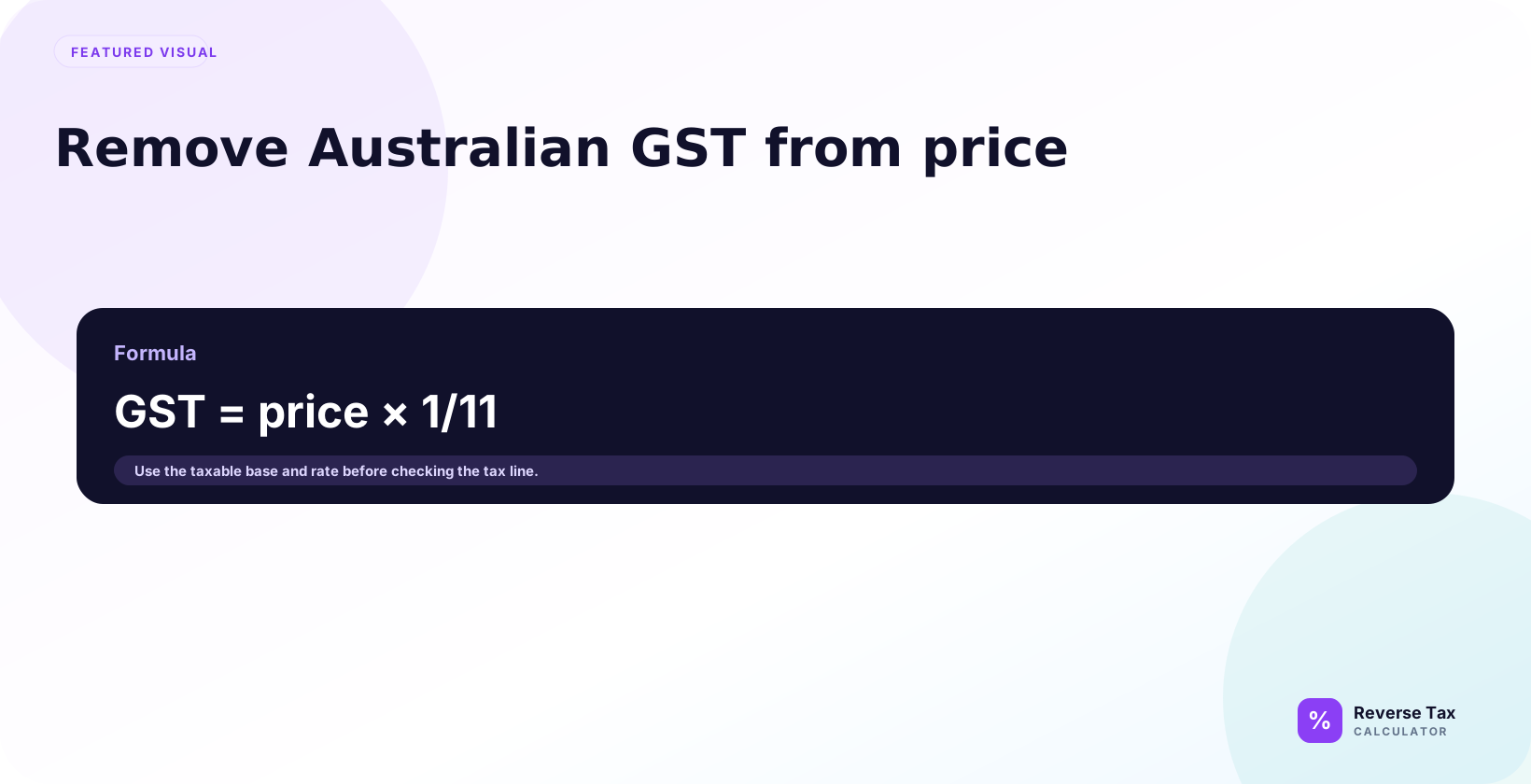
Australian GST removal separates the GST included in a GST-inclusive Australian price by dividing the gross total by 1.10 when the standard 10% GST rate applies. The result gives the price before GST and the GST amount already included in the final price. The calculation requires a GST-inclusive amount, taxable supply, correct receipt wording, and separate handling for GST-free items, input-taxed sales, discounts, and rounding.
Formula:
GST-exclusive price = GST-inclusive price / 1.10
Then:
GST included = GST-inclusive price - GST-exclusive price
What Does Removing Australian GST Mean?
Removing Australian GST means working backward from a price that already includes Goods and Services Tax. It separates the amount into:
| Output | Meaning |
|---|---|
| GST-exclusive price | Price before GST |
| GST amount | GST included in the price |
| GST-inclusive price | Final price including GST |
This is useful for receipts, invoices, bookkeeping, refunds, and checking a tax-inclusive price.
Australian GST Formula
The Australian GST reverse formula answers the query "how do I remove 10% GST from a GST-inclusive price?" Divide by 1.10 to find the GST-exclusive price, then subtract that amount from the total to find GST included. Do not subtract 10% of the final price, because GST is 10% of the net price, not 10% of the gross price.
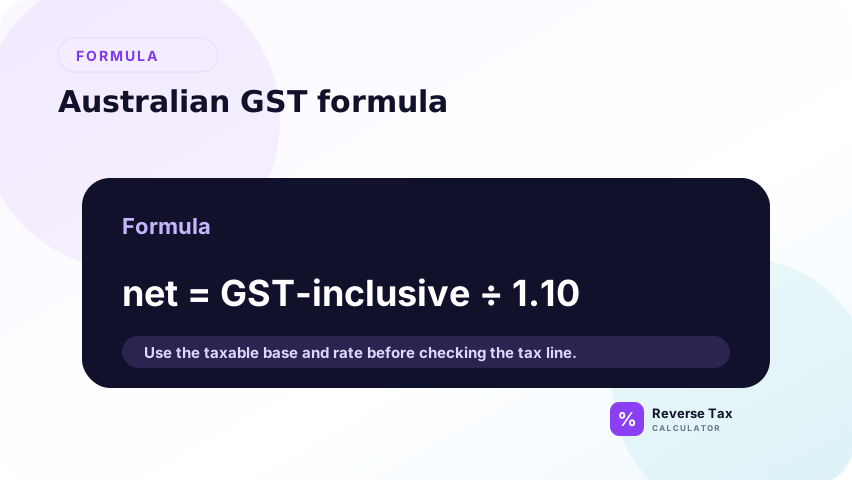
Australian GST is 10 percent on taxable sales. For a GST-inclusive price:
GST-exclusive price = Total / 1.10
GST included = Total - GST-exclusive price
For a general reverse tax formula:
Pre-tax amount = Total / (1 + rate / 100)
At 10 percent:
1 + 10 / 100 = 1.10
One-Eleventh GST Shortcut
At 10 percent GST, the GST included in a GST-inclusive price is one eleventh of the total.
Why:
GST fraction = 10 / 110 = 1 / 11
Example:
110.00 x 1 / 11 = 10.00
Then:
110.00 - 10.00 = 100.00
The division method and one-eleventh shortcut give the same answer when the total is fully GST-inclusive at 10 percent.
Step-by-Step Calculation
The step-by-step workflow answers the query "how do I remove GST from an Australian price without making a formula mistake?" Confirm the price includes GST, divide by 1.10, subtract to find GST, and check forward. This order prevents using the reverse formula on GST-free items, GST-exclusive prices, or mixed totals that need line-level separation first.
Use the steps as a decision sequence. The first step verifies search intent and source evidence. The second step finds the GST-exclusive amount. The third step identifies the GST portion inside the total. The fourth step proves the result by rebuilding the original price. If the rebuilt total does not match, check rounding, mixed lines, or whether the original amount was actually GST-inclusive.
Step 1: Confirm the Price Includes GST
Only reverse GST from a GST-inclusive amount. Look for labels such as includes GST, GST inclusive, a tax invoice, or a GST amount shown separately. If the amount is GST-exclusive, GST-free, input-taxed, or unclear, do not silently divide by 1.10. The source label controls whether reverse GST is appropriate.
If the price is GST-exclusive, calculate GST forward instead by multiplying by 1.10. If the item is GST-free or input-taxed, the reverse GST formula may not apply at all. This first step protects the calculation from using the right arithmetic on the wrong kind of price.
Step 2: Divide by 1.10
Divide the GST-inclusive price by 1.10 to find the GST-exclusive price. The divisor is 1.10 because Australian GST is 10 percent of the GST-exclusive amount, so a GST-inclusive price represents 110 percent of the net price. This step removes the GST layer without treating GST as 10 percent of the gross total.
Example:
220.00 / 1.10 = 200.00
The result, 200.00, is the price before GST. This is the number you would use for a GST-exclusive cost, net sale amount, or pre-GST invoice value. Keep extra precision in a spreadsheet before rounding to cents, especially for small receipt totals.
Step 3: Subtract to Find GST
Subtract the GST-exclusive price from the GST-inclusive price to find the GST included. This works because the gross price is made of two parts: the net price and the GST amount. In the example, the total is 220.00 and the GST-exclusive price is 200.00, so the included GST is 20.00.
220.00 - 200.00 = 20.00
This is safer than multiplying 220.00 by 10 percent, which would give 22.00 and overstate GST. The 10 percent rate applies to the 200.00 GST-exclusive amount, not to the 220.00 GST-inclusive amount.
Step 4: Check by Calculating Forward
Check the result by adding GST forward from the GST-exclusive price. Multiply the GST-exclusive price by 10 percent, then add that GST amount back to the GST-exclusive price. If the result returns to the original GST-inclusive price, the reverse calculation is internally consistent.
200.00 x 10 percent = 20.00
200.00 + 20.00 = 220.00
If the check does not return to the original amount, review whether the price included GST, whether the item was GST-free, whether the receipt had mixed taxable and GST-free lines, or whether rounding changed the displayed cents.
Worked Example: 110.00 GST-Inclusive
| Component | Amount |
|---|---|
| GST-inclusive price | 110.00 |
| Divide by | 1.10 |
| GST-exclusive price | 100.00 |
| GST included | 10.00 |
Worked Example: 550.00 GST-Inclusive
This larger example shows that the same 1.10 divisor works beyond the simple 110.00 example. It is useful for invoices, quotes, and expense records where the total is clearly GST-inclusive and fully taxable. If the total includes GST-free items, shipping adjustments, or discounts, separate those lines before using the 550.00 pattern.
550.00 / 1.10 = 500.00
550.00 - 500.00 = 50.00
The GST-exclusive price is 500.00 and the GST included is 50.00.
Worked Example: Small Receipt Total
Small receipt totals are useful because they show why rounding questions appear. A GST-inclusive amount like 19.99 does not produce a neat two-decimal GST-exclusive amount before rounding. Calculate with precision, round the displayed result to cents, and compare with the receipt's GST line if one is shown.
Suppose a GST-inclusive receipt total is 19.99.
19.99 / 1.10 = 18.1727...
Rounded GST-exclusive price:
18.17
GST included:
19.99 - 18.17 = 1.82
Small totals can create rounding differences depending on whether the system rounds by line or total.
GST-Inclusive vs GST-Exclusive Prices
| Price type | Meaning | Calculation |
|---|---|---|
| GST-inclusive | GST is already inside price | Divide by 1.10 |
| GST-exclusive | GST is not included yet | Multiply by 1.10 to add GST |
| GST-free | No GST included | Do not remove GST |
| Input-taxed | Special treatment | Verify official guidance |
Reverse GST starts from GST-inclusive prices only.
Receipt and Tax Invoice Clues
Look for:
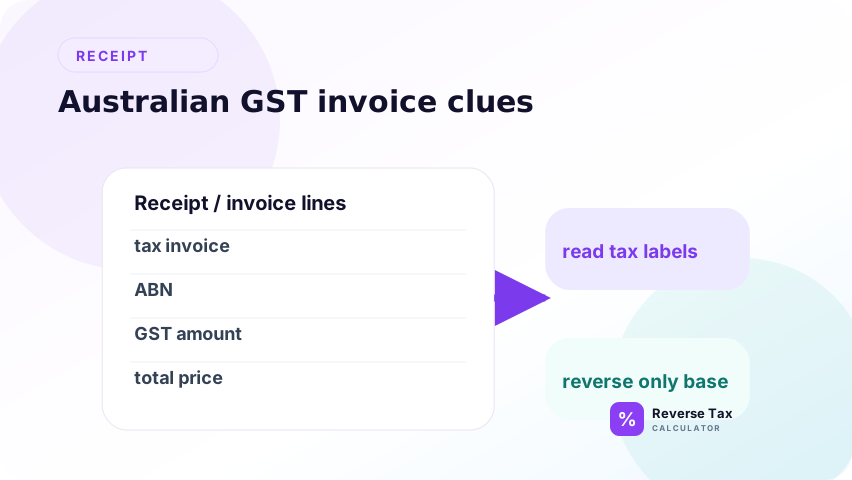
| Clue | Action |
|---|---|
| Includes GST | Divide by 1.10 |
| GST amount shown | Verify by subtraction |
| Tax invoice | Check GST line |
| GST-free item | Do not remove GST |
| Mixed taxable and GST-free items | Separate first |
| Total paid includes tips or fees | Classify before reversing |
Reverse Australian GST with Mixed Items
Suppose a receipt total is 165.00:
| Line | Amount |
|---|---|
| Taxable item including GST | 110.00 |
| GST-free item | 55.00 |
| Total | 165.00 |
Reverse only the taxable item:
110.00 / 1.10 = 100.00
110.00 - 100.00 = 10.00
The GST-free item remains 55.00.
Refund Example
A refund should be matched to the original taxable sale. This example assumes the refund is GST-inclusive and reverses a taxable sale. If the refund is a goodwill credit, shipping-only credit, GST-free item refund, or marketplace adjustment, separate the refund reason before removing GST from the amount.
Suppose a GST-inclusive refund is 33.00.
33.00 / 1.10 = 30.00
33.00 - 30.00 = 3.00
The refund reverses 30.00 of GST-exclusive value and 3.00 of GST, assuming it reverses a taxable sale.
Invoice Example
Suppose an Australian tax invoice shows a GST-inclusive total of 1,100.00 but the GST-exclusive amount is not obvious.
GST-exclusive amount:
1,100.00 / 1.10 = 1,000.00
GST included:
1,100.00 - 1,000.00 = 100.00
| Invoice field | Amount |
|---|---|
| GST-inclusive invoice total | 1,100.00 |
| GST-exclusive amount | 1,000.00 |
| GST included | 100.00 |
If the invoice already shows GST separately, use this as a verification check.
Price Tag Example
A price tag example answers the common retail query "how much GST is inside this displayed price?" If the shelf price includes Australian GST, divide by 1.10 to find the GST-exclusive price and subtract to find GST. This calculation explains price composition, not tax invoice validity or input tax credit treatment.
Suppose a shelf price is 44.00 and the price includes GST.
44.00 / 1.10 = 40.00
44.00 - 40.00 = 4.00
The GST-exclusive price is 40.00. The GST amount is 4.00.
Service Invoice Example
A service invoice uses the same arithmetic when the service is taxable and the invoice states GST is included. If the invoice already shows GST separately, use the reverse formula as a verification check. If the supply is GST-free or input-taxed, do not apply the 1.10 divisor without confirming treatment.
Suppose a consultant invoice total is 880.00 and the invoice states that GST is included.
880.00 / 1.10 = 800.00
880.00 - 800.00 = 80.00
The GST-exclusive service fee is 800.00 and GST is 80.00. If the invoice is for a GST-free supply or does not include GST, this method should not be used.
Discount Example
A discount example answers whether GST should be removed before or after discount. If the discount reduced the taxable selling price before GST was finalized, reverse GST from the discounted GST-inclusive price. If the discount is a later credit, reimbursement, or settlement adjustment, inspect the invoice sequence before calculating.
Suppose a product is 220.00 before discount, then a 20.00 discount reduces the GST-inclusive selling price to 200.00.
Reverse GST from the discounted price:
200.00 / 1.10 = 181.82
200.00 - 181.82 = 18.18
Reverse GST reconstructs the GST-exclusive amount after discount. It does not recover the original pre-discount shelf price unless the discount is separately known.
Australian GST Quick Table
| GST-inclusive price | GST-exclusive price | GST included |
|---|---|---|
| 11.00 | 10.00 | 1.00 |
| 44.00 | 40.00 | 4.00 |
| 110.00 | 100.00 | 10.00 |
| 220.00 | 200.00 | 20.00 |
| 1,100.00 | 1,000.00 | 100.00 |
Rounding Australian GST
Australian GST calculations can create repeating decimals because dividing by 1.10 often produces more than two decimal places. Keep precision in the working calculation and round only the displayed result. If a tax invoice differs by one cent, compare line-level rounding with total-level rounding before assuming the GST rate is wrong.
GST calculations can create repeating decimals. For example:
200.00 / 1.10 = 181.8181...
Rounded GST-exclusive price:
181.82
GST:
200.00 - 181.82 = 18.18
One-cent differences can occur when GST is rounded by item, by line group, or by total.
Australian GST Rate vs GST Share of Total
The GST rate is 10 percent of the GST-exclusive price, but GST is not 10 percent of the GST-inclusive total. It is one eleventh of the total.
| GST-inclusive price | GST share using one eleventh | GST-exclusive price |
|---|---|---|
| 55.00 | 5.00 | 50.00 |
| 110.00 | 10.00 | 100.00 |
| 550.00 | 50.00 | 500.00 |
This distinction is why “take 10 percent off” gives the wrong GST amount.
Mini Audit Before Removing GST
The mini audit protects the calculation from false confidence. Before removing GST, confirm the price includes GST, the sale is taxable rather than GST-free, and all receipt lines use the same GST treatment. If any answer is unclear, use the tax invoice or line details before calculating. A correct formula cannot fix the wrong input base.
Ask three questions:
- Does the price include GST?
- Is the sale taxable rather than GST-free?
- Are all receipt lines using the same GST treatment?
If the answer to any question is unclear, separate the receipt lines or verify the tax invoice before calculating.
Decision Matrix
| Situation | Best action |
|---|---|
| Price includes GST at 10 percent | Divide by 1.10 |
| GST amount already shown | Verify by subtraction |
| Mixed taxable and GST-free items | Separate first |
| GST-free sale | Use 0 percent |
| Refund | Use original sale evidence |
| Rounding difference | Check line-level rounding |
| Business records | Verify with official ATO guidance |
Operational Checklist
Before removing Australian GST, check:
| Check | Why it matters |
|---|---|
| Price is GST-inclusive | Confirms division by 1.10 is needed |
| Sale is taxable | GST-free items should not be reversed |
| Receipt lines are separated | Mixed receipts need group-level math |
| Tax invoice is available | Helps verify GST amount |
| Refund ties to original sale | Uses correct taxable base |
| Rounding is expected | Explains one-cent differences |
What Australian Reverse GST Can and Cannot Prove
| Can prove | Cannot prove |
|---|---|
| GST-exclusive price from a GST-inclusive total | Whether a sale is legally taxable |
| GST amount using 10 percent | Whether seller should have charged GST |
| One-eleventh GST amount | Whether input tax credit rules apply |
| Receipt arithmetic consistency | Whether documentation is sufficient |
Common Mistakes
Common Australian GST mistakes come from confusing the GST rate with the GST share of a GST-inclusive total. GST is 10% of the GST-exclusive amount, but it is one eleventh of the GST-inclusive total. Other errors come from using the formula on GST-free items, ignoring mixed receipts, reversing the final paid total, or rounding too early.
The practical fix is to classify the amount before calculating. Ask whether the number is GST-inclusive, GST-exclusive, GST-free, a refund, a discount, a service invoice, or a mixed receipt total. Then choose the formula. This entity-first habit prevents most spreadsheet errors because the formula is only used after the tax treatment and price label are clear.
Taking 10 Percent Off the Total
Taking 10% off the GST-inclusive total overstates the GST amount. For 110.00, 10% of the total is 11.00, but the GST included is 10.00. Use one eleventh to find GST directly, or divide by 1.10 to find the GST-exclusive price first.
GST included in 110.00 is 10.00, not 11.00.
Using the Formula on GST-Free Items
GST-free items do not contain GST to remove. The reverse formula can still calculate a number, but that number will not represent real GST if the source amount was GST-free. Separate taxable and GST-free lines before calculating so the 1.10 divisor applies only to GST-inclusive taxable amounts.
If no GST was included, there is no GST to remove.
Reversing the Final Paid Total Without Checking Lines
Final paid totals can include GST-free items, tips, shipping, fees, discounts, refunds, or settlement adjustments. Reversing the full paid amount can remove GST from amounts that never included GST. Identify the clean taxable GST-inclusive base first, then apply the formula only to that amount.
Final totals can include GST-free items, tips, fees, or adjustments.
Confusing GST-Inclusive and GST-Exclusive
GST-inclusive prices are divided by 1.10 to remove GST. GST-exclusive prices are multiplied by 1.10 to add GST. Reversing a GST-exclusive amount understates the net price, while adding GST again to a GST-inclusive amount double-counts tax. Let the invoice wording decide the calculation direction.
GST-inclusive prices are divided by 1.10. GST-exclusive prices are multiplied by 1.10 to add GST.
Ignoring Rounding
One-cent differences can occur when GST is rounded by item, by line, or by invoice total. The one-eleventh shortcut and divide-by-1.10 method should agree before rounding, but displayed cents can differ. Keep the source tax invoice and note the rounding method if the result supports bookkeeping.
One-cent differences can occur when GST is rounded by line.
Entity Map for Australian GST Reverse Calculation
| Entity | Role |
|---|---|
| GST-inclusive price | Starting point for reverse GST |
| GST-exclusive price | Price before GST |
| GST amount | Difference between inclusive and exclusive price |
| GST-free item | No GST to remove |
| Receipt line | May need separate treatment |
| Tax invoice | Evidence for GST amount |
What This Page Does Not Cover
| Topic | Better page |
|---|---|
| General VAT | How to Reverse VAT from a Total |
| New Zealand GST | How to Remove New Zealand GST from a Price |
| Multiple taxes | Reverse Formula for Multiple and Stacked Taxes |
| Rounding | How to Round Reverse Tax Calculations |
Frequently Asked Questions
How do I remove 10 percent GST in Australia?
Divide the GST-inclusive price by 1.10 to find the GST-exclusive price, then subtract that result from the total to find GST included. This works only when the amount is taxable and GST-inclusive. If the receipt contains GST-free items or adjustments, separate those lines before calculating.
Divide the GST-inclusive price by 1.10, then subtract the result from the total.
What is the GST in 110.00?
If 110.00 includes Australian GST at 10 percent, the GST-exclusive price is 100.00 and GST is 10.00.
Why is GST one eleventh of the total?
Because 10 percent GST makes the GST-inclusive total 110 percent of the GST-exclusive price. The GST portion is 10 out of 110, or one eleventh.
Can I remove GST from GST-free items?
No. GST-free items do not contain GST to remove. If a receipt includes both taxable and GST-free items, reverse only the taxable GST-inclusive portion and leave the GST-free amount unchanged. This prevents the calculator from creating a GST amount that was never charged.
No. GST-free items do not include GST to remove.
Why does my receipt differ by one cent?
Your receipt can differ by one cent because the seller may round GST by item, by line group, or by invoice total. A spreadsheet may also keep more precision than the receipt display. Compare the rounding method before assuming the GST rate or formula is wrong.
Rounding by line or by total can create small differences.
Sources
These sources support the official Australian GST context, while the formulas on this page come from the arithmetic relationship between GST-exclusive price, GST rate, and GST-inclusive total. Use the Australian Taxation Office for compliance-sensitive questions such as registration, GST-free supplies, tax invoices, BAS reporting, and input tax credits. Use this page for reverse calculation and receipt interpretation only.
- Australian Taxation Office, GST