British Columbia GST and PST reversal separates federal GST and provincial PST from a tax-inclusive total based on how the receipt applies each tax. GST and PST can appear as separate tax lines, so each taxable base requires its own rate and multiplier before the before-tax price is trusted. The calculation depends on product taxability, exemptions, shipping, discounts, receipt rounding, and whether the total combines both taxes or lists them separately.
Formula for a simple same-base example:
Pre-tax amount = GST/PST-inclusive total / 1.12
Then:
Included GST and PST = Total - pre-tax amount
What GST and PST Mean in B.C.
GST is the federal Goods and Services Tax. PST is British Columbia’s Provincial Sales Tax.
The Government of B.C. states that B.C. PST is a retail sales tax that applies when taxable goods, software, or services are acquired in B.C. or brought into B.C. for use in B.C., unless a specific exemption applies. It also states that PST is generally 7 percent on the purchase or lease price of goods and services, with some exceptions.
| Tax | Common rate | Role |
|---|---|---|
| GST | 5 percent | Federal tax |
| PST | Generally 7 percent | B.C. provincial tax |
| Simple combined example | 12 percent | Only when both apply to same base |
Reverse GST and PST Formula
The British Columbia reverse GST and PST formula depends on whether both taxes apply to the same taxable base. When GST at 5% and PST at 7% both apply to the same amount, divide the tax-inclusive total by 1.12. If only GST applies, only PST applies, or the bases differ, separate the lines before calculating.
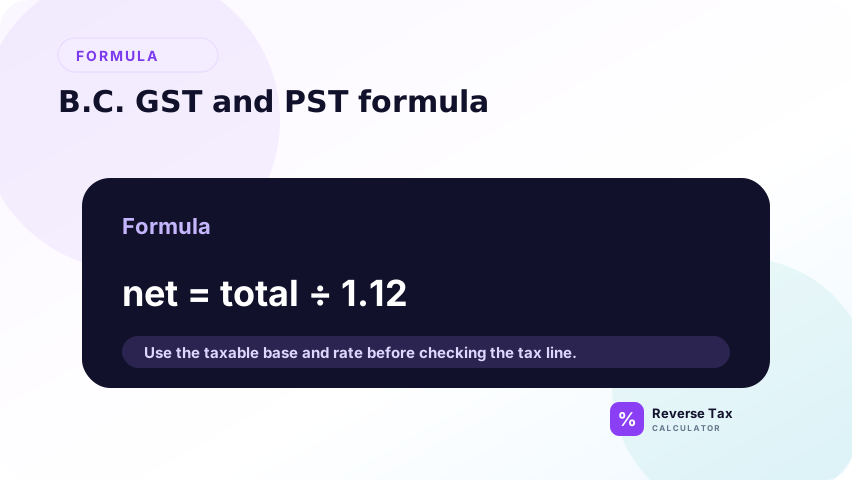
Use the combined formula only when both taxes are calculated on the same pre-tax base:
Combined rate = 5 percent + 7 percent = 12 percent
Multiplier = 1.12
Pre-tax amount = Total / 1.12
Then split the tax:
GST = pre-tax amount x 5 percent
PST = pre-tax amount x 7 percent
Step-by-Step Calculation
The step-by-step calculation starts by confirming the receipt is from British Columbia, identifying GST and PST labels, checking whether both taxes apply to the same base, dividing by the correct multiplier, and then reconciling GST and PST amounts. If the receipt shows tax lines separately, use those lines as source evidence.
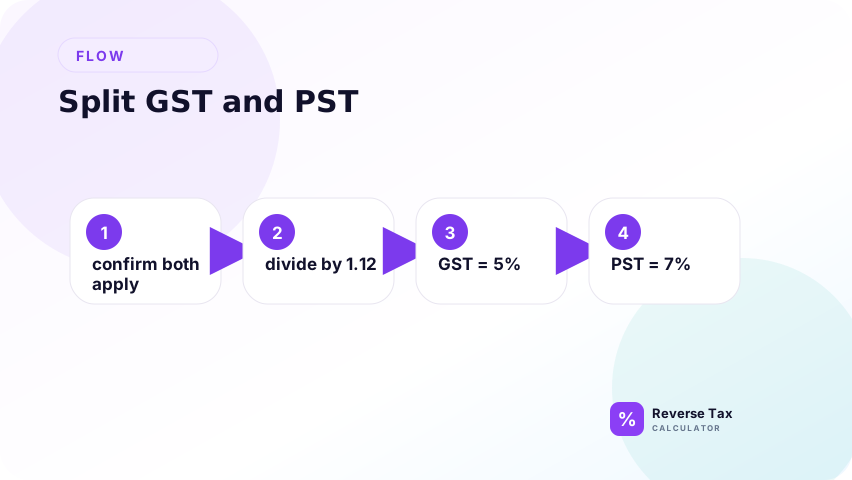
Use the steps as a label-first workflow. British Columbia does not use HST, so the receipt may show GST and PST separately. Before dividing by 1.12, confirm both taxes are included in the amount and both apply to the same taxable base. If one tax is missing or item treatment differs, split the receipt by tax group.
Step 1: Confirm the Total Includes Both GST and PST
Confirm that the total you are reversing actually includes both GST and PST. A British Columbia receipt may show GST and PST as separate lines, or it may show one tax-inclusive amount that already contains both taxes. If GST and PST are shown separately, you may not need a reverse formula at all. You can subtract both tax lines from the total and use the formula only as a verification check.
This step protects the calculation from using a combined 12 percent rate on the wrong amount. A final payment total can include tips, deposits, delivery charges, credits, or exempt items. Use the amount that represents the taxable GST-and-PST-inclusive base, not automatically the last number on the receipt.
Step 2: Confirm Both Taxes Apply to the Same Base
Confirm that GST and PST apply to the same taxable base before using the 12 percent shortcut. GST is 5 percent and B.C. PST is commonly 7 percent, but those rates can be combined only when both taxes apply to the same item amount. If GST applies but PST does not, or PST applies to a different base, one combined divisor will produce the wrong pre-tax amount.
This is the most important step for real receipts. British Columbia transactions can include taxable items, PST-exempt items, GST zero-rated items, software, services, delivery charges, accommodation, or special tax categories. If the tax treatment differs by line, split the receipt into tax groups before calculating.
Step 3: Divide by 1.12
Divide the GST-and-PST-inclusive total by 1.12 only when both taxes apply additively to the same base. The multiplier 1.12 represents the original 100 percent price plus 5 percent GST plus 7 percent PST. Division removes both tax layers and returns the pre-tax amount.
Total / 1.12 = pre-tax amount
For example, if the clean GST-and-PST-inclusive amount is 224.00, dividing by 1.12 gives 200.00. That 200.00 is the base used to calculate both GST and PST. If the receipt has separate GST-only or PST-only lines, calculate those groups separately instead of forcing everything through 1.12.
Step 4: Split GST and PST
Split GST and PST from the pre-tax amount after the base has been recovered. Calculate GST as 5 percent of the pre-tax amount and PST as 7 percent of the same pre-tax amount when both taxes apply to the same base. This keeps the two tax labels visible instead of collapsing them into one generic 12 percent tax amount.
For a 200.00 pre-tax amount, GST is 10.00 and PST is 14.00. The total tax is 24.00, and the reconstructed total is 224.00. If those numbers do not reconcile to the receipt, check rounding, exemptions, special taxes, or whether GST and PST were applied to different bases.
B.C. Example
Suppose the tax-inclusive total is 224.00.
Pre-tax amount:
224.00 / 1.12 = 200.00
GST:
200.00 x 5 percent = 10.00
PST:
200.00 x 7 percent = 14.00
| Component | Amount |
|---|---|
| Pre-tax amount | 200.00 |
| GST at 5 percent | 10.00 |
| PST at 7 percent | 14.00 |
| Total | 224.00 |
Reverse Table for B.C. GST and PST
| Total | Combined rate | Pre-tax amount | GST | PST | Total tax |
|---|---|---|---|---|---|
| 112.00 | 12 percent | 100.00 | 5.00 | 7.00 | 12.00 |
| 224.00 | 12 percent | 200.00 | 10.00 | 14.00 | 24.00 |
| 560.00 | 12 percent | 500.00 | 25.00 | 35.00 | 60.00 |
When Not to Use 12 Percent
The 12 percent shortcut is not universal.
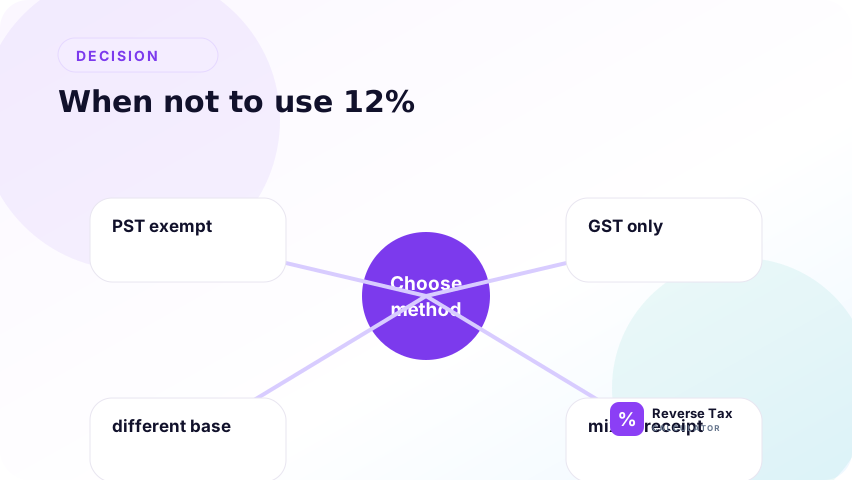
| Situation | Better method |
|---|---|
| PST exemption applies | Reverse GST only if GST applies |
| GST zero-rated supply | Do not remove GST |
| PST applies to different base | Calculate separately |
| Mixed taxable and exempt items | Separate first |
| Accommodation or special tax | Verify industry rule |
| Delivery or imported goods | Verify B.C. rule |
The Government of B.C. guidance emphasizes that PST applies unless a specific exemption applies, which means exemptions must be checked before calculating.
Receipt and Invoice Clues
Look for:
| Clue | Action |
|---|---|
| GST line | Verify 5 percent of base |
| PST line | Verify 7 percent of base unless exception |
| Total includes tax | Reverse if both apply |
| Exempt line | Remove from taxable base |
| Software or service line | Check PST applicability |
| Accommodation | Check MRDT or special taxes |
Example: GST Applies but PST Does Not
This example matters because not every British Columbia receipt has both GST and PST on every line. Some items may be GST-taxable but PST-exempt, while others may have different treatment. If PST does not apply, do not divide by 1.12. Use the GST-only formula or line-level evidence for that item.
Suppose a GST-inclusive total is 105.00 and PST does not apply.
105.00 / 1.05 = 100.00
105.00 - 100.00 = 5.00
Using 12 percent would be wrong because PST was not included.
Example: Mixed B.C. Receipt
Suppose a receipt total is 162.00:
| Line | Amount |
|---|---|
| GST/PST-taxable item after both taxes | 112.00 |
| Exempt item | 50.00 |
| Total | 162.00 |
Reverse only the taxable item:
112.00 / 1.12 = 100.00
The exempt item remains 50.00.
Example: PST-Only Included Amount
A PST-only included amount should not be reversed with the combined GST plus PST formula. If the amount includes only PST, use the PST rate and base that actually apply. This scenario is less common than a clean GST plus PST example, but it shows why tax labels and line detail are more important than province name alone.
Some B.C. charges may involve PST treatment that is not simply the same as GST treatment. If you have a PST-inclusive amount and PST is the only tax being reversed at 7 percent:
107.00 / 1.07 = 100.00
107.00 - 100.00 = 7.00
Do not use this PST-only method for a total that also includes GST.
Example: B.C. Software or Service Line
The Government of B.C. charging guidance lists software and several services among areas where PST may apply. This matters because a receipt can include goods, software, services, and exempt lines.
| Line | Tax treatment question |
|---|---|
| Goods | Are they taxable for PST and GST? |
| Software | Is PST payable? |
| Service to goods | Is PST payable? |
| Exempt item | Should be removed from taxable base |
| Accommodation | May involve additional taxes |
For reverse tax, group each line by the taxes actually charged.
B.C. Receipt Verification
If a B.C. receipt shows subtotal, GST, and PST, verify the implied rates:
GST rate = GST / subtotal x 100
PST rate = PST / subtotal x 100
Example:
10.00 / 200.00 x 100 = 5 percent
14.00 / 200.00 x 100 = 7 percent
If the receipt does not match, check for exemptions, mixed items, industry-specific rules, or rounding.
Decision Matrix
| Situation | Best action |
|---|---|
| GST and PST both apply to same base | Divide by 1.12 |
| GST only | Divide by 1.05 |
| PST only | Divide by 1.07 if PST-inclusive |
| Mixed taxable and exempt items | Separate first |
| GST and PST shown separately | Verify line math |
| Unknown PST exemption | Verify B.C. guidance |
| Refund | Use original sale evidence |
Operational Checklist
Before using 12 percent in a calculator, confirm:
| Check | Why it matters |
|---|---|
| GST applies | Otherwise 5 percent is not included |
| PST applies | Otherwise 7 percent is not included |
| Same taxable base | Otherwise 12 percent shortcut can fail |
| No exempt lines included | Prevents over-removing tax |
| Receipt date is known | Supports historical verification |
| No special industry tax mixed in | Accommodation and other areas can differ |
| Rounding is expected | Explains cent differences |
What This Calculation Can and Cannot Prove
| Can prove | Cannot prove |
|---|---|
| Arithmetic split from 12 percent | Legal PST applicability |
| GST and PST amounts from known base | Whether an exemption applies |
| Whether receipt math is consistent | Whether the seller registered correctly |
| Difference between GST-only and GST/PST | Every industry-specific B.C. rule |
This keeps the calculation useful without overstating what it can decide.
Example: B.C. Tax-Inclusive Refund
Suppose a customer receives a 56.00 refund that reverses an item where both GST and PST applied to the same base.
56.00 / 1.12 = 50.00
GST:
50.00 x 5 percent = 2.50
PST:
50.00 x 7 percent = 3.50
The refund reverses 50.00 of pre-tax value, 2.50 of GST, and 3.50 of PST. If the original item was PST-exempt, this 12 percent method would be wrong.
Entity Map for B.C. Reverse Tax
| Entity | Role |
|---|---|
| Pre-tax price | Base amount before GST and PST |
| GST | Federal 5 percent tax |
| PST | B.C. provincial tax, generally 7 percent with exceptions |
| Exemption | Removes PST or tax from certain lines |
| Receipt total | May include taxable and exempt amounts |
| Refund | Should connect back to original taxable sale |
The 12 percent shortcut is valid only when the GST and PST entities attach to the same pre-tax price.
Common Mistakes
Common mistakes include using HST for British Columbia receipts, applying GST plus PST to exempt items, assuming both taxes apply to the same base, ignoring shown tax lines, and rounding too early. The fix is to identify tax labels, taxable base, and item treatment before choosing the divisor.
The most common calculation mistake is using the province as the only clue. A British Columbia receipt can include GST-only lines, PST-only lines, GST plus PST lines, exempt lines, and fees. The formula should follow the tax labels and taxable base on the receipt, not just the province name.
Using 12 Percent on Every B.C. Receipt
Some items or services may be exempt from PST or treated differently.
Forgetting GST and PST Are Separate Taxes
The 12 percent shortcut works only when both apply to the same base.
Ignoring B.C. PST Exceptions
B.C. PST has exceptions and industry-specific rules.
Reversing the Final Paid Total
Tips, fees, exempt lines, or special taxes may need to be separated first.
Using HST in B.C.
B.C. currently uses GST and PST, not HST, for general B.C. sales tax structure.
Ignoring Timing Rules
B.C. guidance explains when PST is payable in relation to invoice and purchase timing. For old invoices, the date can matter.
What This Page Does Not Cover
| Topic | Better page |
|---|---|
| GST only | How to Reverse GST from a Total |
| HST | How to Reverse HST from a Total |
| Canadian overview | GST, HST, PST, and QST Explained |
| Multiple taxes formula | Reverse Formula for Multiple and Stacked Taxes |
Frequently Asked Questions
What is GST and PST in B.C.?
GST is the federal 5 percent tax. PST is B.C.’s provincial sales tax, generally 7 percent with exceptions.
Can I use 12 percent to reverse B.C. tax?
Yes, only when GST at 5 percent and PST at 7 percent both apply to the same taxable base.
How do I split GST and PST after reversing?
Calculate GST as 5 percent of the pre-tax amount and PST as 7 percent of the pre-tax amount.
What if PST does not apply?
Do not use 12 percent. Use the tax or taxes that actually apply.
Why does my B.C. receipt not match 12 percent?
Exemptions, special PST rules, mixed items, accommodation taxes, rounding, or non-taxable charges may affect the receipt.
Sources
These sources support British Columbia GST and PST context. The formulas on this page come from the arithmetic relationship between taxable base, GST, PST, and tax-inclusive total. Use CRA and BC provincial guidance for compliance-sensitive taxability, exemptions, rates, registration, and filing. Use this page for reverse calculation and receipt interpretation.
- Government of British Columbia, B.C. provincial sales tax
- Government of British Columbia, Charging and collecting PST
- Canada Revenue Agency, Charge and collect the GST/HST