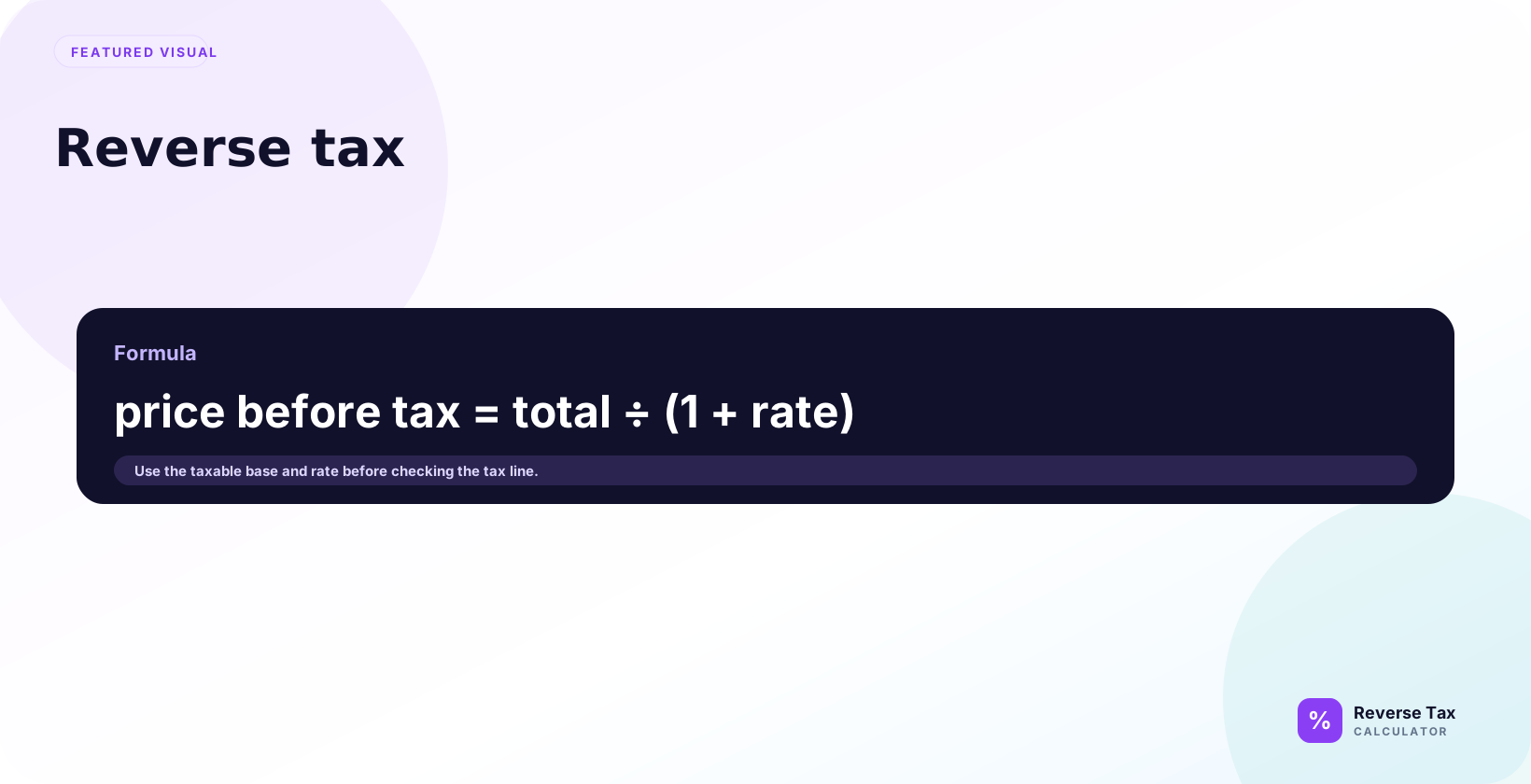
Reverse tax is the calculation that removes included tax from a tax-inclusive total to recover the before-tax price and the tax amount inside the total. The formula divides the total by 1 plus the tax rate divided by 100, then subtracts the result from the total. Reverse tax applies to VAT, GST, HST, PST, QST, and sales tax when the amount already includes one known tax rate.
This glossary page defines reverse tax as an entity, explains the formula, distinguishes it from forward tax calculation, and shows when the term should and should not be used.
What Is Reverse Tax?
Reverse tax means calculating backward from a tax-inclusive total. Instead of starting with the pre-tax price and adding tax, you start with the total including tax and remove the included tax mathematically.
Example: if a total is $108.00 and the tax rate is 8%, reverse tax finds the $100.00 before-tax price and the $8.00 included tax.
The entity is defined by direction. Reverse tax is not a special tax type, refund rule, or government program. It is a calculation method used when the tax is already embedded in the number you have. That distinction helps separate the math from compliance questions.
How Does Reverse Tax Work?
Reverse tax works by dividing the tax-inclusive total by 1 plus the tax rate:
Pre-tax amount = Total including tax / (1 + Tax rate)
Then:
Tax amount = Total including tax - Pre-tax amount
The formula works because the total including tax is the pre-tax amount multiplied by 1 plus the rate. Reverse tax undoes that multiplication.
The divisor is the important part. A rate of 8% becomes 1.08, a rate of 13% becomes 1.13, and a rate of 20% becomes 1.20. Once the divisor is correct, the calculation separates the total into two connected values: the original base and the included tax.
Why Is Reverse Tax Not Simple Subtraction?
Reverse tax is not simple subtraction because the tax percentage is based on the before-tax amount, not the after-tax total. If you subtract 8% from $108.00, you remove $8.64 and get $99.36. The correct before-tax price is $100.00.
This mistake is common enough that the divide vs subtract explanation should be linked from any page where users may try to remove tax manually.
Reverse Tax vs Forward Tax Calculation
Forward tax adds tax to a before-tax amount. Reverse tax removes tax from a tax-inclusive total.
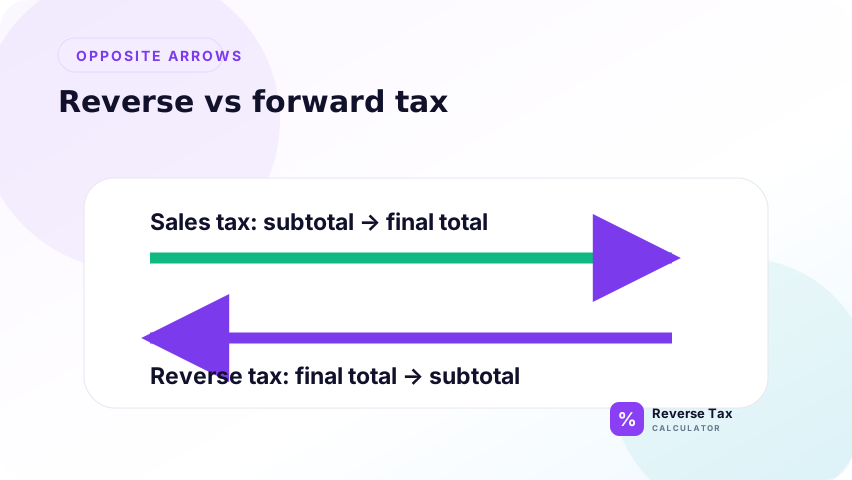
| Direction | Starting amount | Formula |
|---|---|---|
| Forward tax | Pre-tax amount | Pre-tax * (1 + rate) |
| Reverse tax | Tax-inclusive total | Total / (1 + rate) |
The direction matters. Using the reverse formula on a tax-exclusive subtotal creates the wrong answer.
What Values Does Reverse Tax Need?
A reliable reverse tax calculation needs a tax-inclusive total and either the tax rate or the tax amount. If the tax amount is shown, subtract it from the total. If the rate is shown, divide by 1 plus the rate.
If neither the rate nor the tax amount is known, the before-tax price cannot be reconstructed reliably from the total alone. You may estimate an implied rate only when both total and subtotal are known.
When Should You Use Reverse Tax?
Use reverse tax when you have a total that already includes tax and you need to separate the before-tax price from the included tax. Common use cases include tax-inclusive receipts, VAT invoices, GST-inclusive prices, refunds, ecommerce order totals, bookkeeping splits, and gross sales reports.
If you are calculating from a receipt, the remove tax from a receipt guide explains how to handle itemized lines, discounts, and multiple tax groups.
When Should You Not Use Reverse Tax?
Do not use reverse tax when the price already excludes tax, when the tax amount is shown separately and should be used directly, or when the total mixes taxable and non-taxable amounts that cannot share one rate.
Do not use reverse tax to decide whether something should have been taxed. That is a taxability question, not a math question.
Also avoid reverse tax when the amount comes from a payout or settlement export that has already been reduced by platform fees, refunds, chargebacks, or payment processing costs. In that case, the source amount is not a clean tax-inclusive price. Trace it back to the receipt, invoice, or order record first.
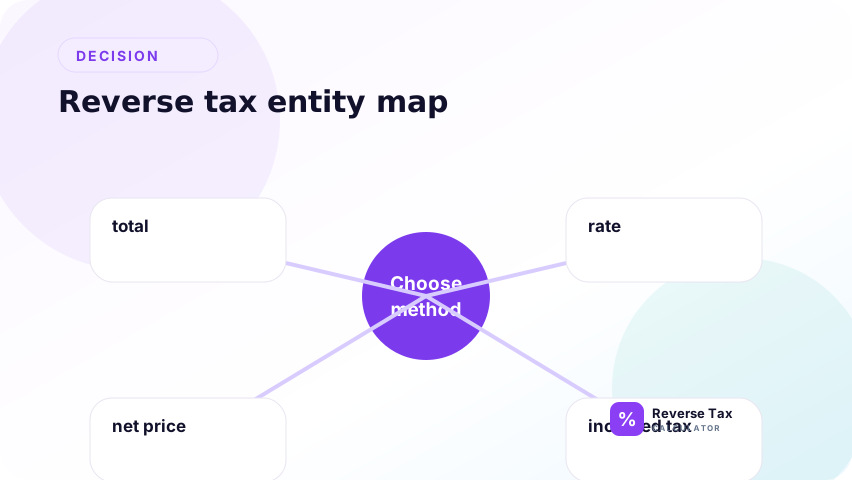
Reverse Tax Entity Map
| Entity | Attribute | Value or role |
|---|---|---|
| Reverse tax | Main action | Remove included tax from total |
| Tax-inclusive total | Input | Amount that already includes tax |
| Tax rate | Attribute | Decimal or percentage used in divisor |
| Pre-tax amount | Output | Amount before tax |
| Tax amount | Output | Difference between total and pre-tax amount |
This entity map keeps the calculation terms close together so the formula is easier to audit.
How Reverse Tax Works in Spreadsheets
Use explicit column names such as tax_inclusive_total, tax_rate, pre_tax_amount, and tax_amount. If the total is in A2 and the rate is in B2, use:
=A2/(1+B2)
Tax amount:
=A2-(A2/(1+B2))
For batch files, add a rebuilt-total check so each row proves that pre-tax amount plus tax amount equals the original total.
Good spreadsheet design also stores the source type. A row from a receipt, invoice, refund, POS export, or marketplace payout may need different cleanup before the formula is safe. Adding a source_document or calculation_note column helps reviewers understand why the row was reversed.
What Mistakes Happen in Reverse Tax?
The main mistakes are subtracting the tax percentage, using the wrong rate, applying one rate to mixed items, reversing a tax-exclusive subtotal, and ignoring rounding. Each mistake can produce a number that looks reasonable but does not match the receipt.
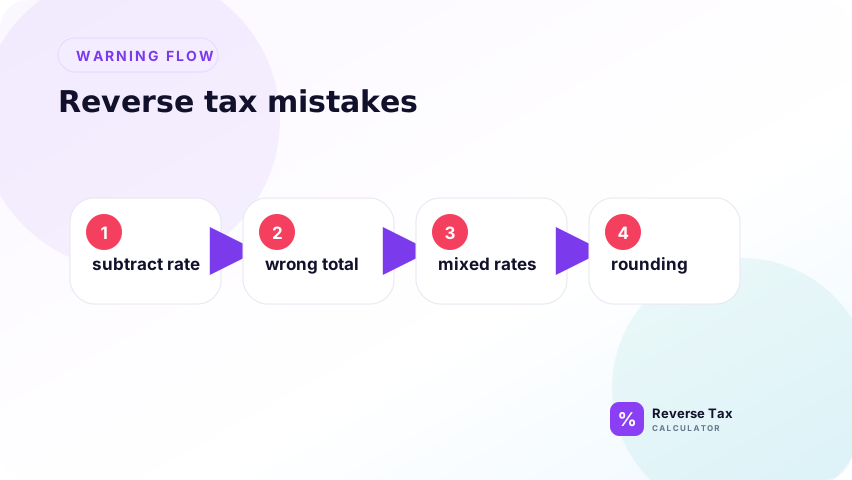
When the answer differs by a cent, review rounding first. When it differs by more than a cent, review the rate, source total, discounts, shipping, exemptions, and item groups.
Trust Boundary
Reverse tax is arithmetic. It does not prove that a product is taxable, that a rate is current, that a business is registered, or that a filing position is correct. The calculation only separates tax from a known tax-inclusive amount.
Use official tax authority sources and the original receipt or invoice for compliance-sensitive decisions.
This boundary is especially important because tax content can affect financial decisions. A mathematically correct reverse tax result can still be based on the wrong rate, wrong jurisdiction, wrong source total, or wrong assumption about taxable items. Treat the result as a calculation output, not as legal, accounting, or filing advice.
Frequently Asked Questions
What does reverse tax mean?
Reverse tax means removing included tax from a total. If a total is $108.00 including 8% tax, reverse tax finds the $100.00 before-tax price and the $8.00 included tax.
What is the reverse tax formula?
The reverse tax formula is total including tax divided by 1 plus the tax rate. At 8%, divide by 1.08. At 20%, divide by 1.20. The tax amount is the total minus the calculated before-tax amount.
Is reverse tax legal or accounting advice?
No. Reverse tax is a calculation method. It can support bookkeeping, receipt checks, and invoice review, but it does not decide taxability, registration, filing, exemption, or accounting treatment.
Sources and Notes
- IRS Publication 583 recordkeeping guidance
- Formula source: arithmetic relationship between tax-inclusive total, tax rate, pre-tax amount, and tax amount.